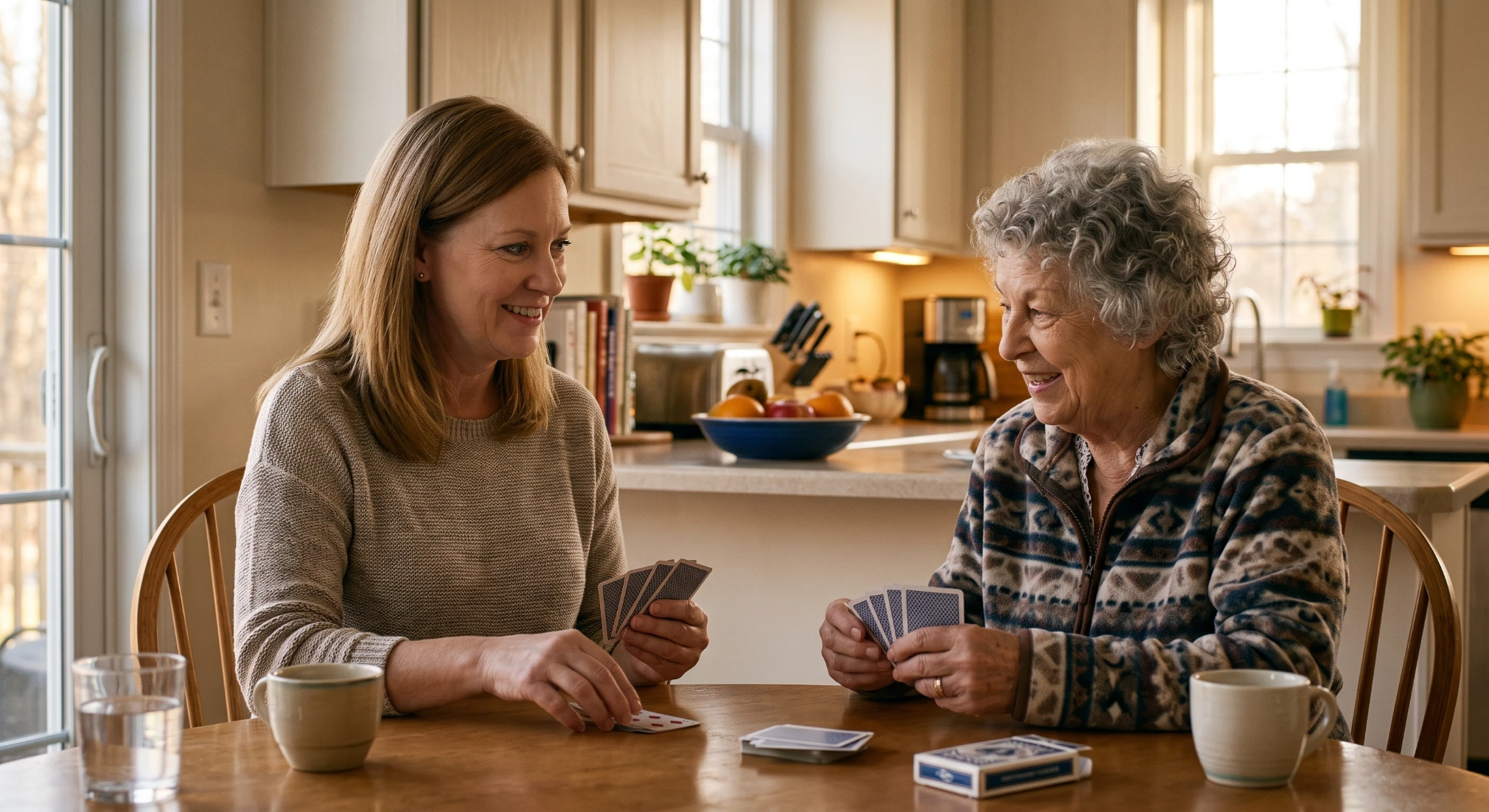



When a parent or loved one begins to need more help at home, families often have to make important decisions quickly. Siblings may agree that their loved one needs support, but disagree about what kind of care is needed, who should provide it, how much it should cost, or who should take responsibility.
Even when everyone has the same goal, stress and different perspectives can make these conversations challenging.
At Emerald Helpers LLC, we understand that arranging care is not just about finding the right services. It is also about helping families navigate the decisions that come with changing care needs.
Start With What You All Agree On
Before discussing schedules, finances, or caregivers, focus on your shared goal: What will help our loved one feel safe, comfortable, and supported?
That might mean:
- Helping them remain safely at home
- Supporting their independence
- Providing companionship
- Making daily routines easier
- Giving family caregivers a break
- Respecting their personal preferences
Keeping the conversation focused on your loved one’s needs can help prevent disagreements from becoming personal.
Give Everyone a Chance to Speak
Siblings often have very different experiences with caregiving.
One may live nearby and handle appointments and errands. Another may live out of state but provide financial support. Someone else may be balancing work and a family of their own.
Instead of assuming someone is not doing enough, ask:
- “What are you most concerned about?”
- “What are you noticing?”
- “What do you think Mom or Dad needs?”
- “What are you realistically able to help with?”
Listening does not mean you have to agree. It simply creates space for everyone to be heard.
Keep Emotions and Decisions Separate
Caregiving can bring up guilt, fear, frustration, and sadness. A sibling who lives far away may feel guilty for not being there. The sibling handling most of the day-to-day responsibilities may feel overwhelmed or resentful.
Try to acknowledge those feelings without allowing them to take over the conversation.
A simple statement such as:
“I know this is difficult for everyone. Let’s focus on what we can do to make things easier.”
can help bring the conversation back to the current situation.
Focus on What Your Loved One Needs Now
When families are stressed, discussions can quickly become focused on old disagreements. Instead, concentrate on the current needs.
Ask:
- What tasks are becoming difficult?
- Are there safety concerns at home?
- When is help needed most?
- What is the family currently handling?
- What responsibilities are becoming too difficult to maintain?
- Would professional in-home support make things easier?
Writing down the answers can turn a difficult conversation into a practical plan.
Remember That Fair Doesn’t Always Mean Equal
Every sibling may not be able to contribute the same amount of time or money—and that is okay.
One person may be able to visit regularly. Another may coordinate appointments. Someone else may help financially or manage paperwork.
The goal is not necessarily to divide responsibilities equally. The goal is to create a plan that is realistic and sustainable for everyone.
If family members are becoming overwhelmed, professional personal care support can provide another option without placing the entire responsibility on one person.

Keep Your Loved One at the Center
Whenever possible, your loved one’s preferences should be part of the decision.
Ask what they want and consider their preferences regarding:
- Staying at home
- Daily routines
- Personal care
- Companionship
- Household assistance
- Caregiver schedules
- Independence and privacy
The best care plan is one that addresses safety and needs while also respecting the individual’s choices and dignity.
Don’t Try to Solve Everything at Once
Care needs change. A plan that works today may need to be adjusted later.
Rather than trying to create the perfect long-term solution, start with what is needed now. Then reassess as circumstances change.
A simple approach is:
Assess → Plan → Try → Reassess
This can make the process feel much less overwhelming.
When Your Family Can’t Agree
Sometimes siblings simply cannot reach an agreement. If conversations repeatedly become heated, consider involving a neutral professional who can help the family understand its options and stay focused on the loved one’s needs.
It can also help to establish a few simple rules:
- Listen without interrupting.
- Avoid blaming or keeping score.
- Discuss the current situation rather than past disagreements.
- Use specific examples instead of accusations.
- Focus on solutions rather than who is at fault.
- Keep your loved one’s needs at the center.
Most importantly, remember that disagreement does not mean your family is failing. Caregiving is difficult, and everyone may experience it differently.
You Don’t Have to Do It Alone
As care needs increase, asking for help can be one of the best decisions a family makes. Professional in-home personal care can provide assistance with everyday activities, companionship, household support, and routines while giving family caregivers much-needed peace of mind.
At Emerald Helpers LLC, we believe quality care should support the entire family—not just the individual receiving care.
If your family is beginning to discuss in-home care, Emerald Helpers LLC is here to help you explore your options and find a care approach that fits your loved one’s needs and lifestyle.
You don’t have to navigate the journey alone.