

Coming home after a hospital stay or rehabilitation can be a welcome milestone, but the transition is not always easy.
A loved one may be medically ready to leave a facility but still need help with bathing, dressing, meals, mobility, medication reminders, transportation, or everyday household tasks. Families often find themselves trying to fill these gaps while balancing work, family, and other responsibilities.
Home care after rehabilitation or a hospital stay can help bridge the gap between leaving a facility and managing everyday life at home. With thoughtful planning and the right support, families can make the transition more comfortable, manageable, and less stressful.
1. Personal Care After Hospital Discharge
After an illness, surgery, or rehabilitation stay, familiar activities such as bathing, dressing, grooming, and getting in and out of bed may require more time or assistance than before. Even when someone is eager to return to their normal routine, weakness, fatigue, or temporary mobility limitations can make everyday tasks challenging.
Personal care after surgery or hospitalization can help individuals manage daily routines while maintaining their comfort, privacy, and dignity.
How families can help:
- Find out what assistance your loved one will need before discharge.
- Discuss daily routines and personal care needs with the discharge team.
- Determine which tasks family members can realistically manage.
- Consider in-home personal care to help with bathing, dressing, grooming, and other activities of daily living.
The goal is to provide the right level of assistance without taking away more independence than necessary.
2. Mobility and Fall Prevention at Home
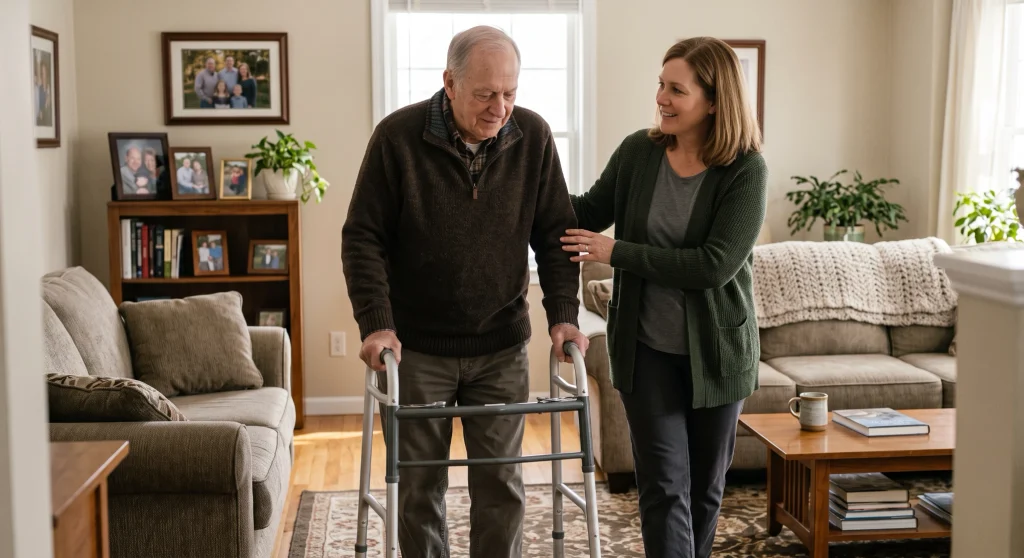
Returning home after hospitalization can bring new mobility challenges. Weakness, fatigue, balance difficulties, or changes in walking ability may make familiar surroundings harder to navigate. Stairs, bathrooms, loose rugs, and poor lighting can create additional hazards.
Fall prevention at home after hospitalization deserves particular attention, especially when someone is adjusting to a walker, recovering from surgery, or regaining strength after rehabilitation.
How families can help:
- Remove clutter, loose rugs, and other tripping hazards.
- Improve lighting in hallways, stairways, and bathrooms.
- Keep frequently used items within easy reach.
- Make sure mobility aids are used as recommended by healthcare professionals.
- Arrange for assistance with walking, transfers, and everyday movement when needed.
- Follow any home safety recommendations provided by the rehabilitation or discharge team.
A personal caregiver can offer assistance with everyday mobility and help maintain a safer home environment. Families should also consult the appropriate healthcare professionals about mobility restrictions, transfer techniques, and physical therapy recommendations.
3. Medication Reminders and Organization
Medication routines can become more complicated after a hospital stay. New prescriptions, dosage changes, and discontinued medications may leave families wondering which instructions are current.
A clear, updated medication plan helps reduce confusion and makes it easier for everyone involved to understand the routine.
How families can help:
- Obtain an updated medication list before discharge.
- Confirm instructions with the prescribing clinician or pharmacist.
- Organize written instructions and schedules in one accessible place.
- Make sure everyone involved in care understands the current routine.
- Ask about potential side effects or concerns that should be reported to a healthcare professional.
Depending on the care plan and applicable regulations, a non-medical personal caregiver may provide medication reminders and observational support. Families should confirm the caregiver’s permitted responsibilities and arrange for qualified healthcare professionals to address medication questions or administration needs outside that scope.
4. Recognizing When More Help Is Needed
Some individuals appear to be doing well immediately after discharge but find it increasingly difficult to manage a full day at home. Fatigue, discomfort, limited mobility, or the demands of everyday tasks may become more apparent once the initial excitement of returning home wears off.
Families may also discover that the amount of assistance needed is greater than they anticipated.
Signs that additional support may be helpful include:
- Difficulty bathing, dressing, or completing personal care routines.
- Trouble preparing meals or maintaining regular eating habits.
- Increased difficulty moving safely around the home.
- Missed medication reminders or confusion about daily routines.
- Household tasks and errands are becoming difficult to manage.
- Family caregivers feeling overwhelmed by the amount of help required.
If you notice a significant change in your loved one’s condition, contact the appropriate healthcare professional. Seek emergency assistance for an emergency.
Recognizing these challenges early gives families an opportunity to adjust the support plan before everyday responsibilities become overwhelming.
5. Planning for a Successful Transition Home
A successful transition home begins before discharge. Understanding what your loved one can manage independently, what assistance will be needed, and who will coordinate the details can help prevent gaps in support.
Families do not need to have every detail figured out immediately. However, a practical plan can make the first days and weeks at home easier to navigate.
Consider these steps when planning for help for seniors after hospital discharge:
- Understand the discharge instructions. Review follow-up appointments, activity restrictions, and any recommended services.
- Identify daily support needs. Consider personal care, meals, mobility, transportation, companionship, and household tasks.
- Coordinate family responsibilities. Clarify who will handle appointments, errands, communication, and other practical needs.
- Plan for changing needs. Recovery may take time, and the amount of assistance required can change from one week to the next.
- Explore in-home support. Determine whether professional caregivers could help fill gaps that family members cannot consistently cover.
Planning ahead can make the return home feel less overwhelming and help families focus on their loved one’s comfort and well-being.
How Emerald Helpers Can Help After Hospital Discharge
At Emerald Helpers, we understand that returning home after a hospital or rehabilitation stay can be an adjustment for the individual and the entire family.
Our personalized, non-medical in-home care services are designed to help individuals manage everyday routines, remain comfortable in familiar surroundings, and maintain as much independence as possible.
Depending on individual needs and the agreed-upon care plan, our compassionate caregivers can assist with personal care, mobility, meal preparation, light housekeeping, laundry, transportation, errands, companionship, and other activities of daily living. We can also provide medication reminders and communicate relevant observations to designated family members, consistent with the care plan and applicable requirements.
Whether your loved one needs a little extra help during recovery or more consistent assistance with daily routines, the right support can help make the transition home more manageable.
Emerald Helpers is here to help your family understand its options, identify gaps in daily support, and arrange personalized care that fits your loved one’s needs and routines.