


Families usually arrive at this question sideways. Nobody sits down and decides to research home care. Something happens: a fall, a hospital stay, a phone call that does not sound right, or a visit where the refrigerator tells a story nobody wanted to hear.
Then comes the question of what kind of help to ask for. And the honest answer for most families is that they are not sure, because they have never had to name what is actually wrong.
Understanding the difference between companionship and personal care can help families recognize what their aging parent needs and decide how to provide the right support at home.
Here is how to tell.
Companionship Care: Support, Connection, and Engagement
Companionship care focuses on presence, social connection, and practical assistance throughout the day. It is especially helpful for older adults who remain relatively independent but could benefit from regular company and a little extra help with everyday activities.
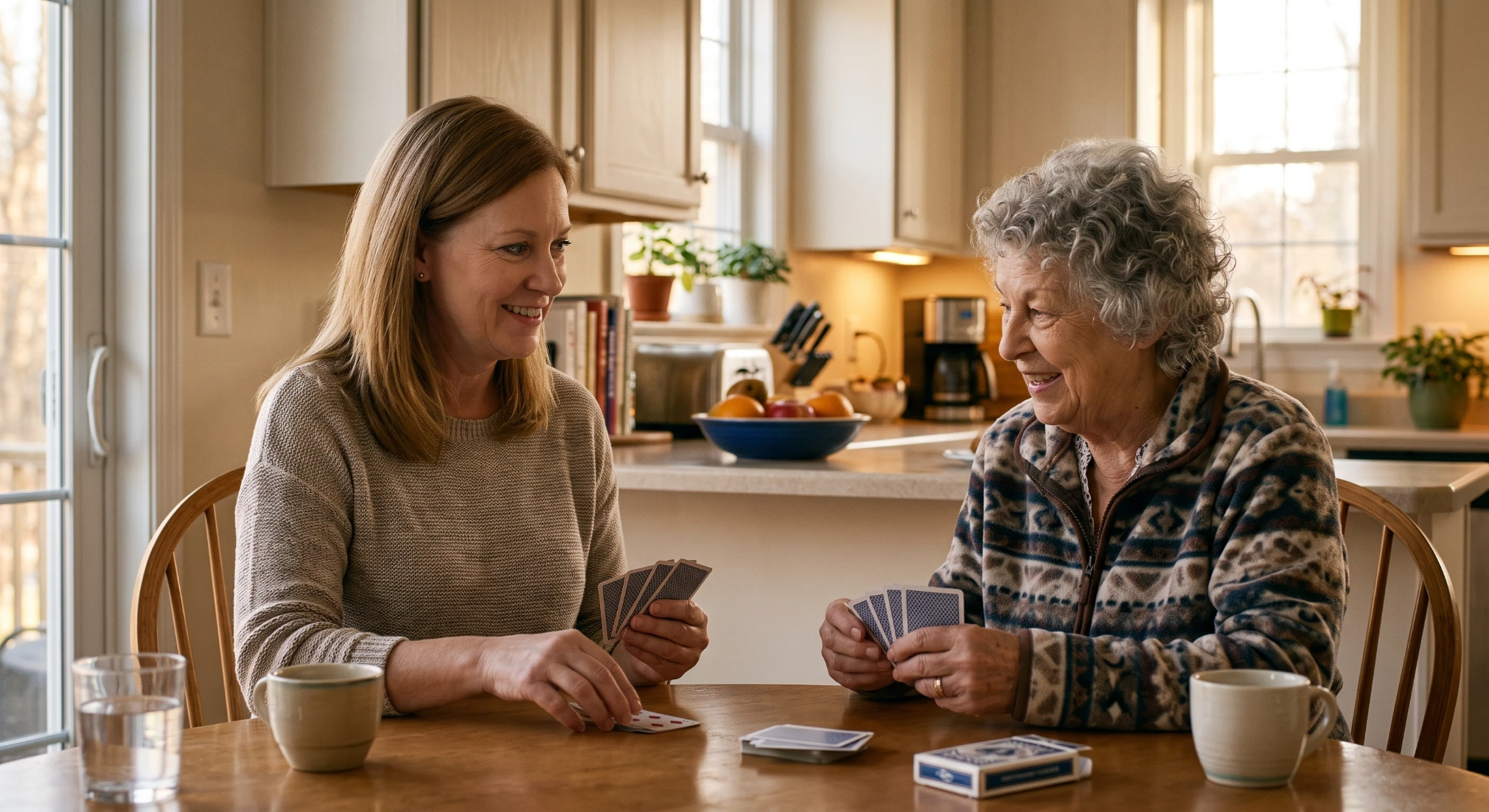
In practice, in-home companionship care might look like conversation over morning coffee, sharing a meal, taking a walk, playing a card game, or getting help with the phone or mail. It might mean a ride to church, the hairdresser, or lunch with a friend.
A companion caregiver also provides another set of eyes and ears in the home, helping families stay connected with a loved one’s daily routine. They may notice that the mail has been piling up, that meals are becoming less frequent, or that an older adult who once enjoyed going out has started spending more time alone.
Companionship care can also include light household tasks that help the day run smoothly, such as meal preparation, laundry, tidying up, grocery shopping, and medication reminders.
What companionship care generally does not include is hands-on assistance with personal hygiene, toileting, or physical transfers. When an older adult needs help with these activities, personal care services may be more appropriate.
Personal Care Services: Help With Everyday Physical Needs
Personal care services provide hands-on assistance with the physical activities of daily living. This type of support helps older adults maintain comfort, safety, and dignity when tasks that were once routine become difficult.
Depending on the person’s needs, in-home personal care may include:
- Bathing and showering.
- Dressing and changing clothes.
- Grooming, shaving, hair care, and oral hygiene.
- Toileting and incontinence care.
- Getting in and out of bed or chairs.
- Moving around the home safely.
- Assistance with eating when needed.
Providing personal care requires appropriate training, patience, and an understanding of how to assist someone safely without making them feel that their independence has been taken away.
The way help is offered matters just as much as the task itself. A good caregiver respects personal preferences, explains what they are doing, and allows the older adult to do as much as possible independently.
Personal care often includes companionship, meal preparation, and other everyday support, depending on the care arrangement. However, companionship alone may not meet the needs of someone who requires hands-on assistance with personal activities.
The Difference Between Companionship and Personal Care
The difference between companionship and personal care comes down to the kind of assistance an older adult needs to manage daily life comfortably and safely.
Companionship care emphasizes social interaction, meaningful activities, and light practical help. Personal care focuses on physical assistance with bathing, dressing, toileting, mobility, and other daily activities.
For many families, the distinction becomes clearer when they consider what is happening at home.
An older adult who can bathe, dress, and move around independently but rarely leaves the house may benefit most from companionship care. Someone who struggles to get into the shower, needs help getting dressed, or has difficulty transferring safely from a bed to a chair may need personal care.
Some older adults need both.
For example, a parent may need assistance getting ready in the morning but also look forward to having someone prepare lunch, talk about the day, or accompany them on an outing. The right care arrangement can address both physical needs and the importance of staying socially connected.
The goal is not to choose a category and fit a person into it. It is to understand the person and build support around what will make everyday life easier.
Signs an Elderly Parent Needs Help at Home
Recognizing the signs an elderly parent needs help can be difficult, especially when a parent insists everything is fine. Changes often happen gradually, and families may not realize how much has changed until they spend time together in the home.
Some signs point to a need for companionship, while others suggest that hands-on personal care may be necessary.
Consider whether you have noticed any of the following:
- Your parents are spending most of the week alone.
- They have stopped driving, and their social activities have become less frequent.
- Meals are becoming irregular or consist mostly of snacks.
- Phone conversations have become shorter, more repetitive, or noticeably different.
- Laundry, housekeeping, or other everyday tasks are falling behind.
- Bathing or changing clothes has become less frequent.
- Getting out of a chair or bed takes considerable effort.
- There has been a fall, a near fall, or a noticeable change in mobility.
- Your parent is having difficulty managing toileting or other personal needs.
- A recent hospitalization, surgery, or illness has changed what they can do independently.
- A family member is providing increasing amounts of care and struggling to keep up.
One sign alone does not necessarily mean that an older adult needs ongoing assistance. However, several changes occurring together deserve attention.
Families should also take sudden changes in mobility, alertness, or daily functioning seriously and seek appropriate medical advice when necessary.
It is worth remembering that support does not have to wait until something goes wrong. Companionship can help address isolation and everyday challenges before they become more difficult to manage.

When to Hire a Caregiver for a Parent
Families often wonder when to hire a caregiver for a parent. There is no single answer, because every person, household, and family situation is different.
A useful starting point is to ask whether your parents are managing daily life comfortably and whether the current arrangement is sustainable for everyone involved.
It may be time to consider a caregiver when:
- Your parents would benefit from regular company or assistance with errands.
- You are concerned about missed meals, household tasks, or growing isolation.
- Personal hygiene or dressing has become difficult.
- Mobility challenges are making everyday activities less safe.
- Your parents need additional support after a hospital stay or surgery.
- You are spending increasing amounts of time coordinating care or providing hands-on assistance.
- You worry about what happens when you cannot be there.
Families do not have to wait for a crisis to explore their options. Starting with a few hours a week can provide reassurance, give an older adult time to become comfortable with a caregiver, and help everyone understand what additional support may be useful.
The most appropriate arrangement may change over time. Someone who begins with companionship may eventually need personal care, while someone recovering from surgery may need more assistance initially and less as their abilities improve.
The important thing is to reassess needs as circumstances change.
Help for Aging Parents at Home: Finding the Right Balance
For many families, help for aging parents at home is not an all-or-nothing decision. Most older adults have a combination of strengths and challenges, and the right support recognizes both.
A parent may be independent in most areas but need help with showering twice a week. They may manage their household reasonably well but benefit enormously from regular conversation, prepared meals, or transportation to appointments. An adult child may be trying to balance work, family responsibilities, and growing concerns about a parent’s well-being.
In these situations, a flexible care arrangement can make a meaningful difference.
The right approach may be to begin with companionship hours that also accommodate personal care when needed. This allows support to evolve without requiring a completely new arrangement every time a person’s needs change.
It also helps build familiarity and trust. When a caregiver understands a person’s routines, preferences, and personality, it becomes easier to provide assistance in a way that feels natural rather than intrusive.
Good home care is not simply about completing tasks. It is about helping someone continue living in a familiar environment while maintaining as much independence, choice, and connection as possible.
Helping a Parent Who Is Reluctant to Accept Care
Almost every family encounters some resistance when discussing home care. A parent may say they do not need help, that they are perfectly fine, or that they do not want a stranger in their home.
These concerns are understandable. Accepting assistance can feel like a significant change, particularly for someone who has managed independently for decades.
Two approaches can make the transition easier.
First, start small. A few hours once or twice a week can feel much less overwhelming than a permanent schedule. It gives your parents an opportunity to get to know the caregiver without feeling that they have surrendered control over their daily life.
Second, consider starting with companionship if that meets the person’s needs. Going for lunch, preparing a meal together, or having someone help with errands may be easier to accept than assistance with bathing or dressing.
As familiarity grows, a parent may become more comfortable accepting additional support when it is needed.
Caregiver compatibility matters, too. A person who feels comfortable with a caregiver’s personality and approach is more likely to welcome that person into their home. Thoughtful caregiver matching can help make the experience feel less like receiving a service and more like having a trusted person available to help.
The Question Underneath the Question: Is It Time?
When families ask which type of care they need, they are often asking something deeper: Is it time to bring someone in?
If you are reading an article like this, something has probably prompted you to look for answers. Perhaps you have noticed a change in your parent’s routine, become concerned about their safety, or realized that the responsibilities of helping them are becoming difficult to manage alone.
Whatever prompted you to start looking, it is worth paying attention to.
You do not have to know exactly which services your parents need before exploring the options. A conversation about daily routines, current challenges, and what would make life easier can be a helpful first step.
The aim is not to take over. It is to find the right level of support so your parents can continue to enjoy life at home with comfort, dignity, and as much independence as possible.
How Emerald Helpers Can Help
Emerald Helpers provides companionship care and personal care services tailored to each person’s needs, preferences, and routines.
We believe successful care begins with understanding the individual, not simply matching a caregiver to a list of tasks. Personality, interests, communication style, and comfort level all matter when introducing someone new into a person’s home.
Christine Kanak, founder of Emerald Helpers, meets with families in their homes to discuss their concerns, learn about their loved one’s needs, and help determine an appropriate approach to care. When appropriate, she introduces the caregiver she has in mind so everyone has an opportunity to meet before services begin.
There is no charge for this initial visit and no obligation to move forward. Families can explore their options, ask questions, and decide what feels right for their situation.
Whether your parents would benefit from regular companionship, hands-on personal care, or a combination of both, the goal is the same: support that fits real life at home.
Ready to explore your options? Schedule a consultation with Emerald Helpers.