

The walker arrives, the therapist demonstrates how to use it, and everyone feels a little safer. Then the walker goes home to a house that was never designed around it, and the falls start anyway.
This is one of the most common challenges families face when preventing falls in older adults. The equipment may be right, and the training may be right, but the home environment can still create unnecessary risks. A hallway that was easy to navigate for forty years may now be too narrow. A favorite chair may sit too low to stand up safely. A rug that has never caused a problem may suddenly catch a walker wheel.
Effective fall prevention at home for seniors starts with understanding how everyday household arrangements can create hazards. Here are some of the most common problems and practical ways families can address them.
Clear Pathways for Safe Walker Use
One of the first steps in home safety for seniors using walkers is to examine the routes your loved one uses most often. Walk from the bed to the bathroom, from the living room chair to the kitchen, and from the front door to the car. Move slowly and pay attention to the floor, available space, and obstacles along the way.
A walker needs enough clearance to move forward and turn without bumping into furniture or getting caught on surrounding objects. Even a few inches can make a difference. Common obstacles include a side table near the entrance, a laundry basket in the hallway, or a dining chair pulled out just far enough to block the path.
The solution is often simpler than families expect: move the furniture rather than asking the person to maneuver around it. Identify the two or three routes used every day, clear them as much as possible, and keep them that way. Where furniture must remain, allow enough room for a comfortable approach and turn.
These small adjustments are an important part of fall prevention at home for seniors because they reduce the need for sudden movements, awkward turns, and last-minute corrections.
Remove Throw Rugs, Threshold Hazards, and Cords
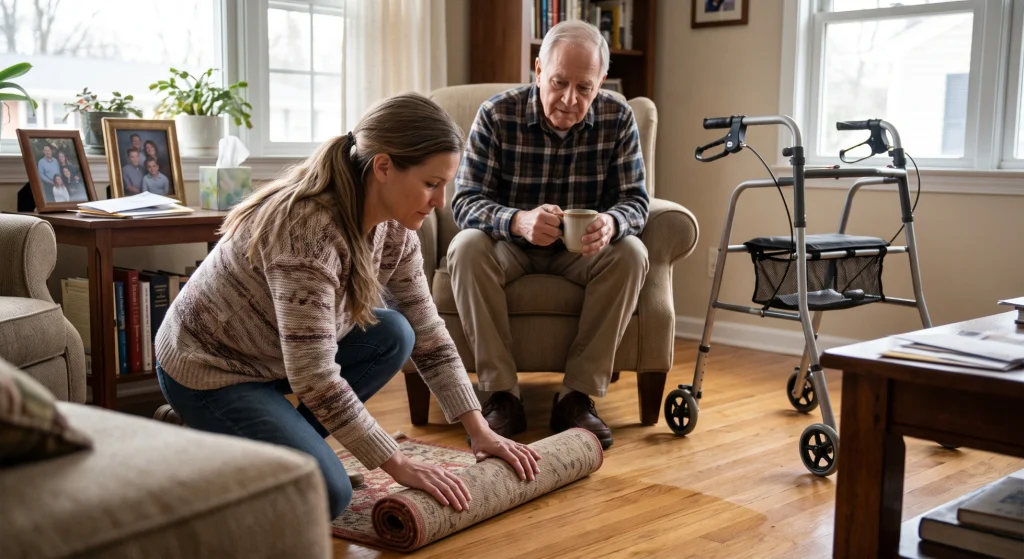
Walker wheels can catch on obstacles that someone walking without a mobility aid might step over without thinking. A curled rug edge, a raised doorway threshold, an extension cord along the wall, or a pet bed in a doorway can interrupt a person’s movement and cause a loss of balance.
Throw rugs deserve particular attention. Even when taped down, they may shift or develop curled edges over time. Removing them is generally the safest option. If a rug must remain, choose a low-profile design with a secure, nonslip backing and check it regularly for movement or curling.
Doorway thresholds also warrant inspection, particularly between rooms and at exterior entrances. Even a small change in floor height can catch a walker wheel or interfere with a person’s step.
Look for cords, loose flooring, clutter, and other fall hazards in the home during a regular walkthrough. Keep walkways open, secure necessary cords away from walking routes, and make sure the transition between rooms is as smooth as possible.
These practical walker use safety tips can make familiar spaces easier to navigate without requiring your loved one to constantly watch for obstacles.
Choose Safe Chair and Bed Heights
Not all falls happen while walking. Many occur during the transition between sitting and standing, when a person may have difficulty shifting their weight or maintaining balance.
A chair that is too low can make standing especially difficult. A person may lean forward and push against the walker for support, causing it to roll away. A chair with a suitable seat height, firm cushions, and sturdy armrests can make standing up more manageable.
Bed height matters, too. When sitting on the edge of the bed, the person’s feet should rest securely on the floor. If the bed is too high or too low, getting up can require awkward movements that increase the risk of losing balance.
Encourage your loved one to follow the transfer techniques recommended by their physical or occupational therapist. In general, a person should push up from a stable chair or bed surface rather than pull on or lean heavily on a walker. Once standing and balanced, they can position their hands on the walker as instructed.
For families considering home safety for seniors using walkers, reviewing chair and bed heights is a useful step that is sometimes overlooked in favor of more obvious hazards.
Improve Bathroom Safety for Walker Users
Bathrooms present unique challenges because they are often small, have slippery surfaces, and require frequent visits throughout the day and night. A walker may not fit easily around the toilet or into the shower area, leaving a person tempted to grab whatever is nearby for support.
Towel bars, shower doors, and sink edges are not designed to support a person’s body weight. Relying on them to maintain balance can lead to a fall.
Depending on the individual’s needs and the bathroom layout, useful modifications may include professionally installed grab bars, a raised toilet seat, a shower chair, and nonslip flooring or bath surfaces. A handheld showerhead may also make bathing easier while seated.
Consider how your loved one moves from the bathroom doorway to the toilet and bathing area. Remove unnecessary items, keep commonly used supplies within easy reach, and allow enough room to turn safely. If the walker cannot enter a particular area, discuss a safe alternative with a qualified healthcare professional.
A home safety assessment for seniors can help families identify bathroom concerns and determine which modifications may be appropriate. The goal is to make essential daily activities safer while preserving as much independence and privacy as possible.
Improve Lighting for Nighttime Walking
Nighttime trips to the bathroom can be particularly risky, even in a home someone has navigated comfortably for decades. Reduced visibility makes it harder to identify obstacles, judge distances, and position a walker correctly before taking the first step.
A person who wakes up in the dark may also feel rushed or disoriented. If the walker has been moved from its usual location, finding it can create another opportunity for a loss of balance.
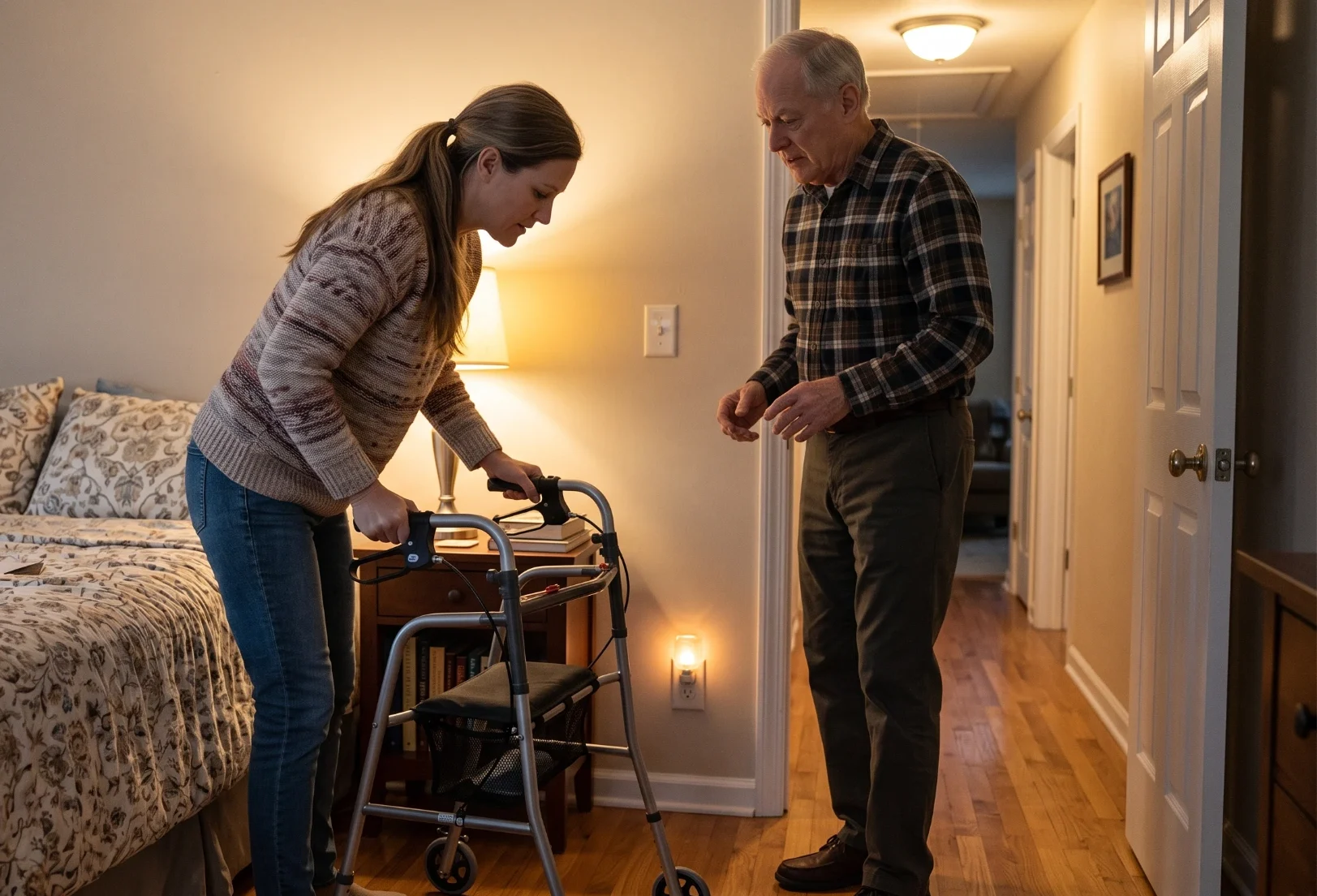
Motion-activated night-lights along the route from the bed to the bathroom can improve visibility without requiring someone to search for a switch. A bedside lamp or accessible light switch can also help. Keep the route clear, and establish a consistent parking spot for the walker beside the bed where it can be reached safely.
Lighting should illuminate the entire walking path, including doorways, changes in flooring, and the entrance to the bathroom. Check that bulbs are working and that shadows do not obscure potential obstacles.
As part of fall prevention at home for seniors, nighttime lighting is a relatively simple improvement that can make familiar surroundings easier to navigate.
Check Walker Height, Wheels, and Brakes
Even when the home is arranged safely, a walker that is poorly adjusted or not maintained can create problems. Equipment may be fitted correctly initially but require periodic checks as parts wear or the person’s mobility changes.
Height
The handgrips should generally align with the wrist crease when the person stands upright with their arms relaxed at their sides. The elbows should remain slightly bent when holding the grips. An incorrect height can contribute to poor posture, discomfort, and difficulty controlling the walker. Ask a physical or occupational therapist to check the fit if you are unsure.
Wheels and glides
Inspect the front wheels for hair, thread, or debris that could interfere with movement. Check the rear glides or tips for uneven wear, damage, or parts that catch on the floor. Worn components may make the walker harder to maneuver.
Brakes
If your loved one uses a rollator with brakes, test them regularly according to the manufacturer’s instructions. Worn or poorly adjusted brakes may not hold the device securely when the person sits down or stands up. Have any brake problems addressed promptly.
Baskets and bags
A heavy bag hanging from one handle can pull a walker to one side, while a heavily loaded front basket may affect balance and maneuverability. Keep belongings secure and distribute weight as evenly as possible. Avoid carrying items in a way that prevents the person from maintaining a safe grip.
These walker use safety tips can help families recognize equipment concerns before they contribute to a fall. If a walker appears damaged, unstable, or difficult to control, seek professional advice rather than attempting an unfamiliar repair.
Check Shoes and Other Everyday Habits
Although footwear is not part of the home itself, it is an important element of an effective fall-prevention plan. Backless slippers, loose socks, poorly fitting shoes, and worn soles can reduce stability even when walkways are clear.
Choose well-fitting shoes with a secure heel, a firm sole, and good traction. Avoid footwear that slips off easily or makes it difficult to feel the floor.
Families should also consider whether their loved one is rushing to answer the phone, reaching for items stored too high, or trying to carry several things while using a walker. Keeping frequently used belongings within easy reach and allowing enough time for daily activities can reduce the need for risky movements.
Preventing falls in older adults involves looking at the whole situation, including the person, the equipment, the home environment, and the activities they perform each day.
What Families Often Overlook About Fall Prevention
When a loved one begins using a walker, family members naturally want to remind them to be careful. They may repeatedly say, “Watch your step,” “Use your walker,” or “Call me if you need anything.”
Although these reminders come from a place of concern, they ask a person to remain alert to every potential hazard throughout the day. That is difficult for anyone to maintain consistently.
Making the home safer can reduce the burden of having to remember every precaution. Removing a loose rug, installing an appropriate grab bar, improving lighting, and creating a clear walking route can continue to help even when someone’s attention is elsewhere.
Another common mistake is assuming that one walkthrough is enough. Household environments change. A basket may reappear in the hallway, a seasonal rug may be brought back out, or a chair may be moved and never returned to its original position.
Regularly reviewing the home is an important part of fall prevention at home for seniors. Pay attention to new obstacles, changes in mobility, and tasks that seem to have become more difficult. If falls or near-falls occur, consult an appropriate healthcare professional to help identify possible contributing factors.
How In-Home Care Can Help Maintain a Safer Environment
Families do not always have the time or opportunity to monitor every change in a loved one’s home. This is one reason in-home care for seniors can be valuable beyond assistance with everyday activities.
Caregivers who spend time in the home may notice changes that family members do not see during shorter visits. A walker wheel may begin catching on a particular surface. A favorite chair may become harder to rise from. A familiar pathway may gradually fill with belongings.
At Emerald Helpers, our caregivers provide non-medical personal care and everyday support tailored to each client’s needs. When appropriate, they can bring potential household hazards or changes in routine to the family’s attention so concerns can be addressed. Caregivers do not replace a professional home safety assessment or the recommendations of a physical or occupational therapist, but their regular presence can help families stay informed.
If you are concerned about your parent’s ability to move safely around the home, Christine Kanak offers an in-home consultation to discuss the family’s needs and explore appropriate support.
A safer home does not necessarily require a major renovation. Often, it begins with noticing the small things that have changed and making thoughtful adjustments that help your loved one continue living with greater comfort, confidence, and independence.