

Most families encounter the terms skilled and non-skilled home care during a hospital discharge conversation, often at the worst possible moment. Someone uses terminology they work with every day, but nobody fully explains the difference. That difference can matter a great deal when you are trying to determine what kind of support a loved one needs.
Here is the plain version.
Skilled vs. Non-Skilled Home Health Care
The difference between skilled and non-skilled care comes down to the type of assistance provided, who delivers it, and why it is needed.
Skilled home health care involves clinical services delivered at home by licensed professionals, such as nurses, physical therapists, occupational therapists, and speech therapists. These services typically address a specific medical condition, injury, or recovery goal and may require a physician’s order.
By contrast, non-medical home care helps people manage everyday activities, maintain their routines, and remain safe and comfortable at home. These services are generally provided by trained caregivers rather than licensed medical professionals.
Both types of care serve important purposes, and many families benefit from having them work together.
Skilled Home Health Care
Skilled care provides clinical services at home through scheduled visits rather than continuous shifts. A nurse might visit several times a week to monitor a condition, while a physical therapist might provide treatment to help someone regain strength and mobility after an illness or surgery.
What Skilled Home Health Care Does
Skilled home health care may include:
- Wound care, injections, IV therapy, and certain catheter or ostomy care procedures
- Medication management and clinical monitoring by a licensed nurse
- Physical, occupational, and speech therapy
- Assessment of medical conditions and communication with the treating physician
- Education to help family members understand and manage a condition at home
When eligibility requirements are met, skilled home health services may be covered by Medicare or other insurance. Coverage depends on the specific service, the person’s circumstances, and the applicable insurance requirements.
What Skilled Home Health Care Does Not Do
Skilled care does not usually provide continuous, day-to-day assistance. This is often the part families find hardest to understand.
The nurse who visits on Tuesday morning may be gone within an hour. That nurse will not necessarily be there when your mother gets up during the night, needs help preparing lunch, or struggles to get dressed the following morning.
Skilled care is generally provided for a defined period, with visits focused on medical needs and established treatment goals. Once those goals are met or the person no longer qualifies for the service, visits may end.
Routine assistance with bathing, dressing, meals, laundry, errands, transportation, and companionship is generally outside the scope of skilled home health care, although certain limited personal care assistance may be included as part of an eligible home health service.
Non-Medical Home Care
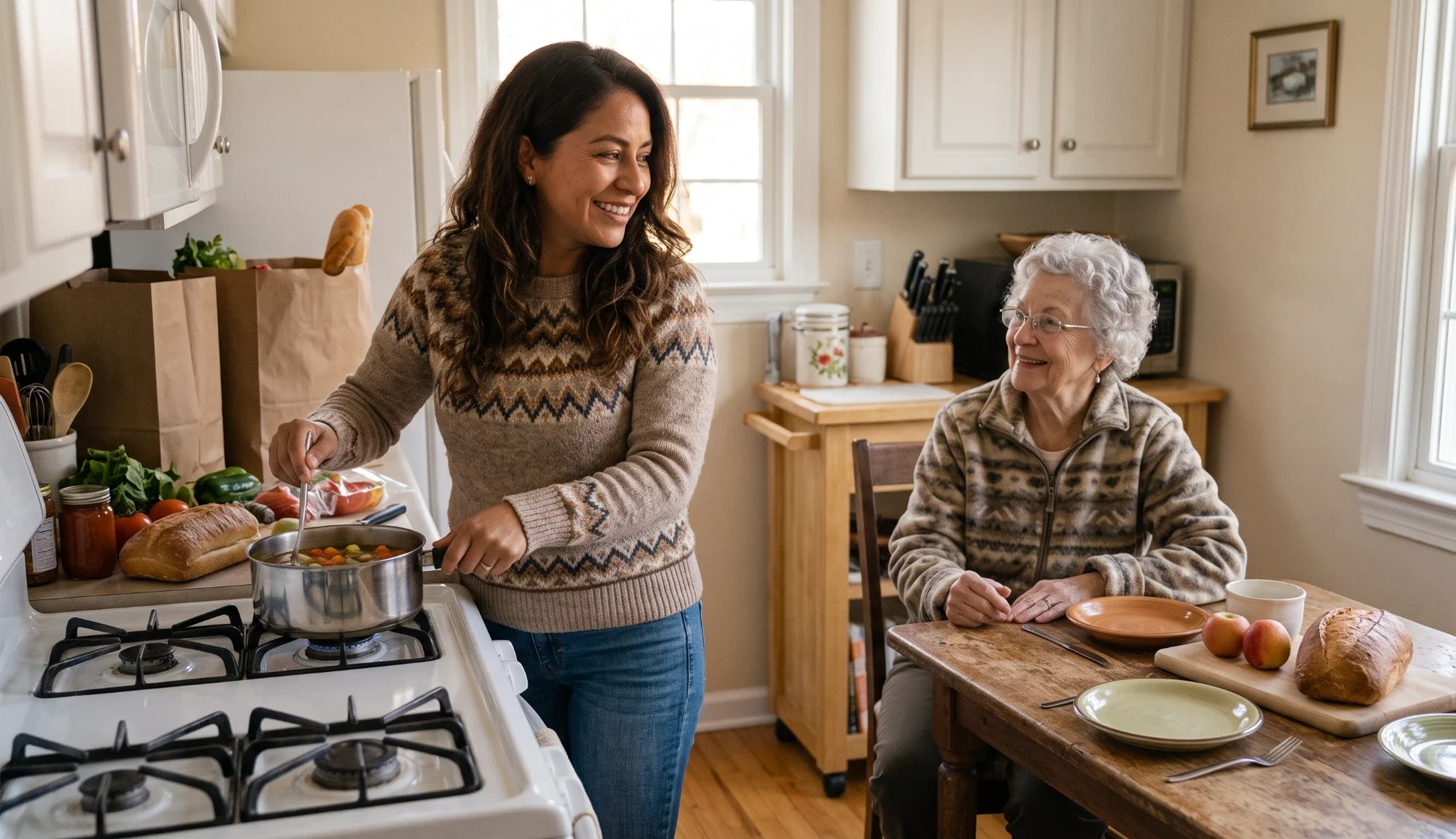
Non-medical home care focuses on everyday needs rather than clinical treatment. Also described as non-skilled care, this type of support helps older adults maintain their independence, follow familiar routines, and continue living in the comfort of their own homes.
These non-skilled home care services are delivered by trained caregivers and can be arranged around a person’s schedule, needs, and preferences. Depending on the situation, a caregiver may visit for a few hours a day or provide more extensive support.
This is the type of care Emerald Helpers provides.
What Non-Skilled Home Care Does
Non-skilled care can help with a wide range of daily activities, including:
- Bathing, dressing, grooming, and toileting
- Mobility assistance, transfers, and everyday fall-prevention practices
- Meal preparation and assistance with eating, as appropriate
- Light housekeeping, laundry, and maintaining a comfortable home environment
- Medication reminders, without independently changing doses or providing clinical medication management
- Transportation to appointments, errands, and social activities
- Companionship, conversation, and meaningful engagement
- Observing changes in routines or well-being and communicating concerns to family members
That last point is one families sometimes underestimate. A caregiver who regularly spends time in the home may notice changes others have not seen. Perhaps a parent is eating less, walking differently, becoming more forgetful, or withdrawing from favorite activities.
Caregivers do not diagnose medical conditions, but they can share observations with family members so concerns can be addressed appropriately.
What Non-Skilled Home Care Does Not Do
Non-skilled care does not replace skilled medical services. Caregivers do not perform clinical procedures such as wound treatment, injections, or other tasks requiring a licensed professional.
They may remind someone to take medication according to established instructions and report concerns if a dose appears to have been missed. They do not independently prescribe medication, change dosages, or make clinical treatment decisions.
Payment arrangements also differ. Many non-medical home care services are privately paid, although some long-term care insurance policies or other programs may provide coverage. Medicare generally does not cover ongoing custodial care when that is the only care needed, though limited personal care assistance may be covered under specific qualifying home health benefits. Families should review their individual coverage before making assumptions.
Personal Care at Home
Personal care at home is an important part of non-medical support, particularly when everyday activities become more difficult because of changes in strength, balance, mobility, memory, or energy.
For some older adults, help with a shower, getting dressed, or moving safely around the house makes the difference between struggling alone and continuing to live comfortably at home.
In-home personal care services may include assistance with bathing, grooming, toileting, dressing, transfers, and mobility. Caregivers can also help with meals, light household tasks, and daily routines, depending on the services arranged.
The goal is not to take over a person’s life. It is to provide the right amount of assistance while respecting individual choices, established habits, privacy, and dignity.
For families exploring home care services for seniors, understanding the level of help a loved one needs is an important first step. Some people need only occasional assistance, while others benefit from a consistent caregiving schedule that provides greater support throughout the day.
Home Care After Hospital Discharge
The period following a hospital stay can be particularly challenging. A loved one may be home before regaining their usual strength, balance, confidence, or ability to manage everyday tasks independently.
Home care after hospital discharge may involve both skilled home health care and non-medical support, depending on the person’s needs.
For example, a physical therapist might visit several times a week to work on strength and mobility. A caregiver could provide additional assistance with meals, dressing, safe movement around the home, and other daily activities between therapy visits.
These services have different responsibilities, but they can complement one another.
As recovery progresses, skilled visits may decrease or end when treatment goals are met. The need for everyday assistance, however, may continue. A person who no longer needs regular therapy may still benefit from help with bathing, meal preparation, transportation, or household tasks.
Planning for both immediate recovery needs and longer-term support can help families make the transition home more manageable.
How to Tell Which Type of Care You Need
A useful starting point is to consider whether the primary need is clinical treatment or help managing everyday life.
If your loved one needs wound care, rehabilitation, nursing assessments, or other clinical services, ask the physician or hospital discharge planner about skilled home health care.
If the concern is whether your parent can bathe safely, prepare meals, manage daily routines, get to appointments, or spend less time alone, non-medical home care may be appropriate.
And if both medical recovery and everyday assistance are needed, the two types of care may work best together.
When you are unsure, discuss the situation with your loved one’s healthcare team and a reputable non-medical home care provider. Each can help clarify the services within their scope.
What to Ask Before Choosing a Home Care Agency
When arranging skilled care, families typically begin with a physician, hospital discharge planner, or insurance provider to understand available services and coverage.
When selecting a non-medical home care agency, families generally have more flexibility. It is worth asking questions that help you understand how the agency operates and whether its approach is right for your loved one.
Consider asking:
- How are caregivers screened, background-checked, and supervised?
- How do you match caregivers with clients based on their needs and personalities?
- What happens if a regular caregiver is unavailable?
- How frequently will family members receive updates?
- Are there minimum service hours or scheduling commitments?
- Who can the family contact when an unexpected concern arises outside normal business hours?
The answers can tell you much more about an agency than a brochure alone.
Where Emerald Helpers Comes In
Emerald Helpers provides non-medical home care for individuals and families who need dependable, personalized support at home. Our caregivers help with everyday activities, companionship, household routines, and other non-medical needs while working alongside nurses, therapists, and other healthcare professionals when appropriate.
Because caregivers spend time in the home, they may also notice changes in a client’s routine or well-being and communicate those observations to family members.
We understand that choosing care is a personal decision. Every family has different concerns, and every individual has different preferences, routines, and needs.
Christine Kanak, founder of Emerald Helpers, offers an in-home consultation to discuss your situation, answer questions, and help you explore what level of support may be appropriate. There is no charge for the visit and no obligation to begin services.
If you are considering care for a loved one, we welcome the opportunity to talk with you.