
The Challenge
Kathleen’s mother had Parkinson’s disease, and then began having seizures that multiple hospitals failed to diagnose. She became unable to talk or eat and was bedridden. The family brought her home, and Kathleen became her main caretaker.
Within that same week, her father was diagnosed with stage 3 lung cancer. He had already had two other cancers and could still function on his own, but the household was now managing two serious illnesses at once.
Her mother also came home with a severe wound that worsened because the right mattress was not ordered in time. She ended up on a wound vac, requiring turning multiple times a day and regular ambulance transport to a wound doctor.
It was June 2021, in the middle of COVID. Kathleen is a teacher, so she was home for the summer, but she knew she would be back in person in the fall. Her sister helped enormously but had her own family and job.
The feeding tube was the obstacle. Their home care agency told them it would be very difficult to find anyone willing to learn feeding tube care, because the agency itself would not do it. They were given a few names and interviewed several people. None of them felt right.
Underneath the practical problem was a harder one. After months in hospitals where the care had not met her expectations, Kathleen had to hand her seriously ill mother to someone she did not know.
Facing Something Like This?

Our Approach
Her sister’s mother-in-law already had Christine Kanak coming to the house several days a week to care for her father-in-law, who had Parkinson’s. Her sister called.
When Christine Kanak came out, she told Kathleen she would learn anything she needed to learn to care for her mother. Then she did. She spent time in the house before ever taking over a shift, learning the feeding tube, learning how to feed and give medication through it.
Her father felt comfortable with her immediately, during the interview visit.
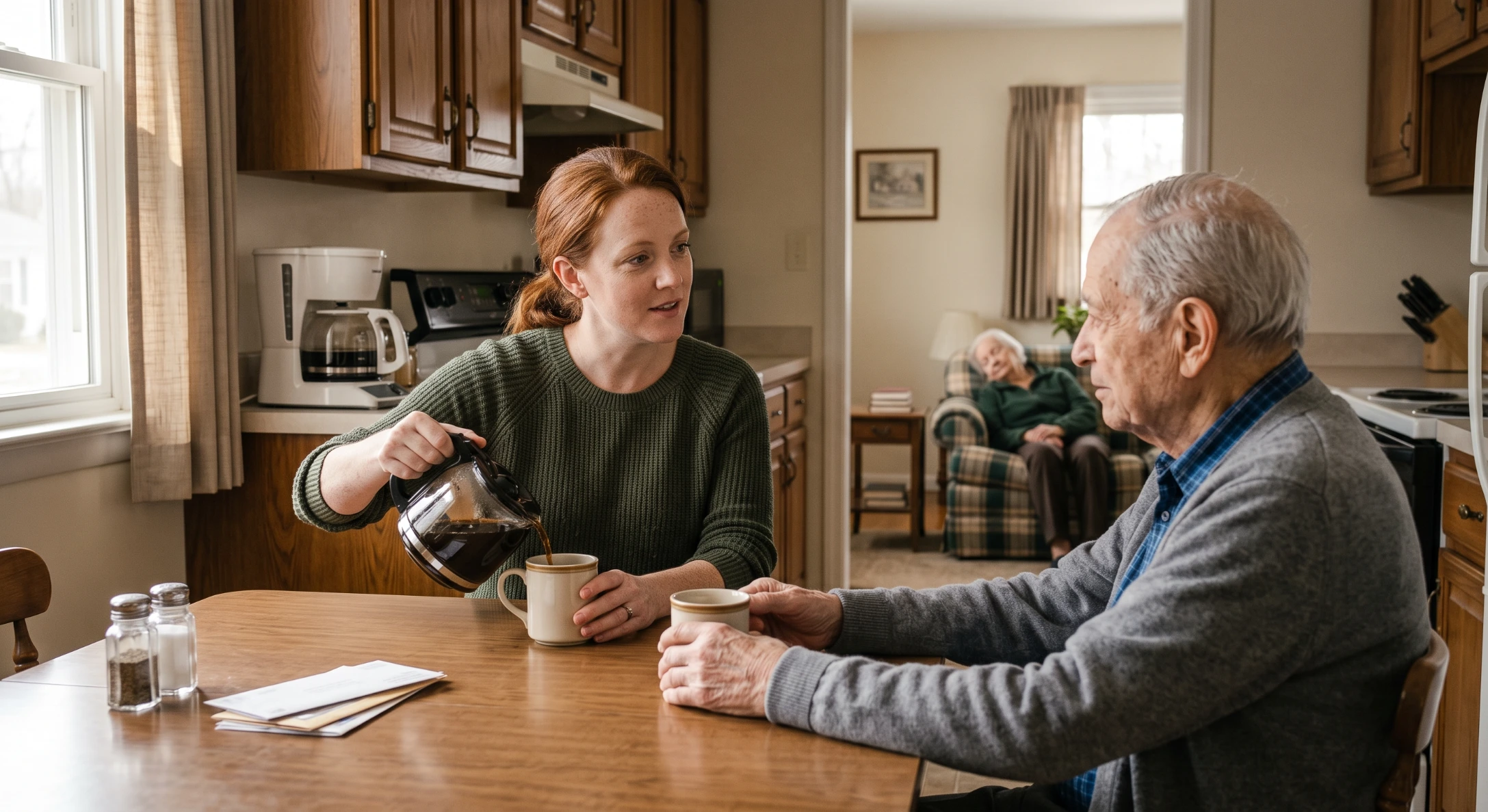
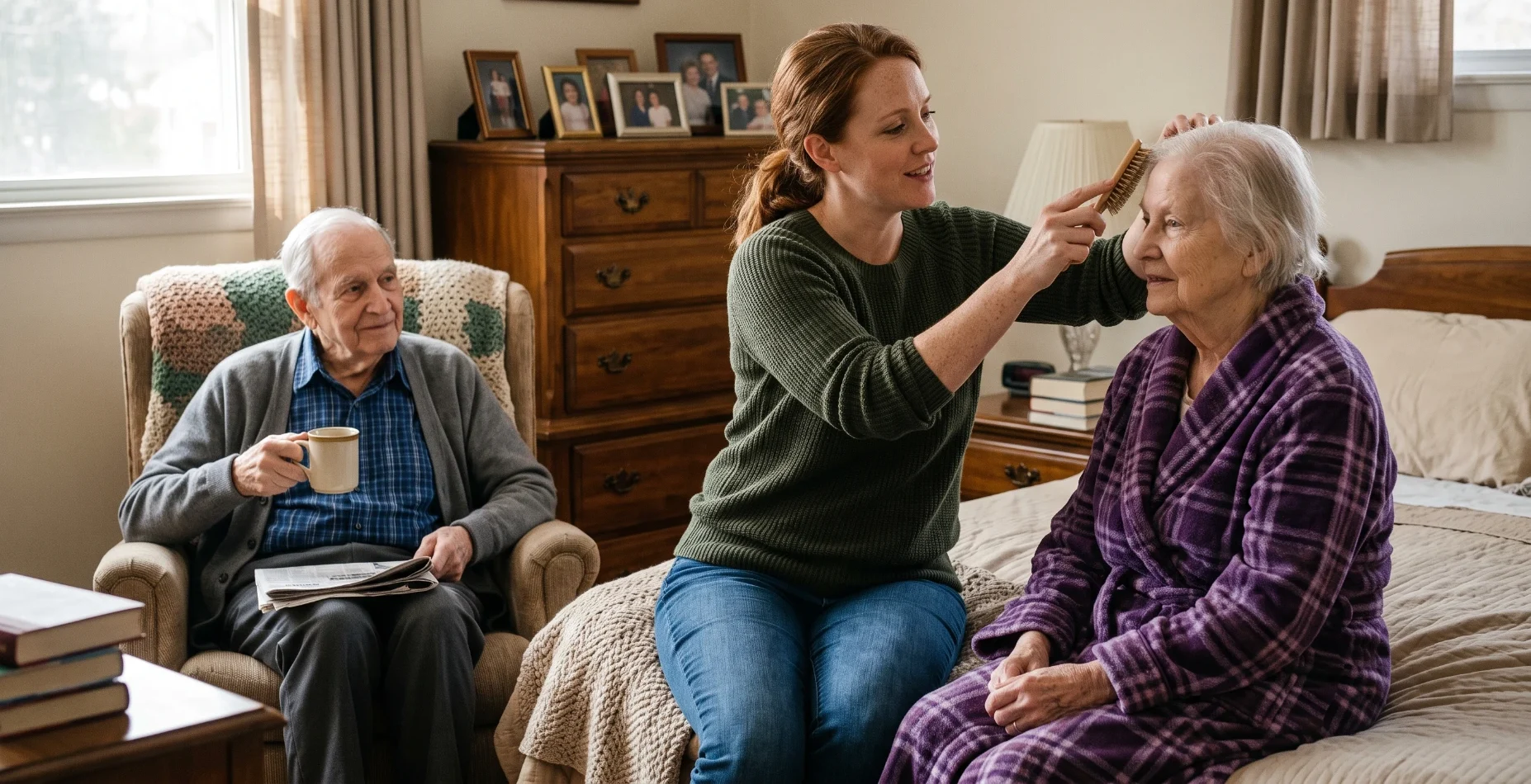
The care went well past the assigned tasks. She washed and styled Kathleen’s mother’s hair, sat and watched TV with her, and talked to her all day even though she could not speak. She made Kathleen’s father a cup of coffee every day before leaving and sat and talked with him, although he needed no care himself.
On wound doctor days she was at the house to help Kathleen and the EMTs move her mother out comfortably, got her ready while Kathleen gathered the wound vac equipment, then made the bed and prepared the house for their return.
Communication ran all day, both directions, including nights when Kathleen was worried about something. When her mother got agitated because she had not seen her husband, who liked to sleep late, Christine Kanak would call and ask what Kathleen wanted her to do, then eventually learned the household well enough to know without asking.
She also helped Kathleen with decisions that were not caregiving decisions. Her mother had come home on palliative rather than hospice care specifically so she could keep her seizure medication, and the family faced repeated pressure to switch. Christine Kanak helped her think through it. She was present whenever a doctor came to the house, and once hospice did begin, she was there for that too. When the morphine order was mishandled, she drove to a pharmacy on a day she was not scheduled to work to get it.
She taught Kathleen things as well, including how to position her mother to protect the bed sore.
The Solution
Kathleen could leave the house every day without worrying about a single thing, which is not something she could say about the hospitals where her mother had been treated.
After her mother passed away, Christine Kanak kept coming out. Kathleen wanted someone keeping an eye on her father, who was grieving, so she told him the visits were to help with food shopping. Christine Kanak helped get him out to the car when he needed it.
Kathleen has since given her name to a close friend whose parents both have cancer and who was overwhelmed alongside her own sister. One of Christine Kanak’s team now cares for them, and it is going well.
Three years later, Kathleen describes the relationship as a bond for life.
This Is What the Right Support Looks Like
Care Type
Location
Philadelphia area
Timeline
June 2021 onward, close to two years